Latest News
November 4, 2026
Celebrating membership of the FEA, bringing affirming systemic perspectives to the RJ Working Team

Celebrating membership of the FEA, bringing affirming systemic perspectives to the RJ Working Team
RJ Working is delighted to have been welcomed into the Fair Education Alliance after a lengthy application process, in which we were complimented on our commitment to impact evaluation (we submitted recent report Reducing Inequality and Valuing Identity for Inclusion through Restorative Practice in Cornwall’s Schools now available on the Impact page of our website). Joining the Alliance brings very immediate benefits – we can connect with other members in Cornwall and use the Membership Directory and Membership Tools. We are excited about the Peer Working Groups – Becky is travelling for the in-person Youth Engagement co-design and Lucy heading to the Policy Insights Group.
Most importantly, this Alliance is about system change, prioritising education justice and youth leadership. In September, the Alliance published its 2026 Report Card: ‘Systems for a Fairer Future, from Neighbourhood to National’. Children from low-income households are already 4.9 months behind their peers at age five, a gap that would take 163 years to close at the current rate of progress, according to Education Policy Institute data. By the end of secondary school, that gap has widened to 19 months with lifelong implications.
Closing these gaps will take every part of the system working together. Successive efforts have focused too heavily on individual institutions and isolated programmes, despite educational inequity being shaped by poverty, health, family support and employment. The 2026 Fair Education Report Card calls for coordinated action from neighbourhood to national level, combining stronger national policy and investment with devolved regional leadership and collaboration. The Report Card outlines 37 recommendations for government across three priorities:
1) making schools part of connected communities,
2) joining up education, skills and employment, and
3) building a village around every child.
Read the full Report Card 2026: https://www.faireducation.org.uk/reportcard
The RJ Working team is proud to see our logo among the many members, halfway down, on the righthand side !
Our challenges in Cornwall are acute, with many kinds of evidence pointing to a serious dip, following the withdrawal of the European Social Fund which was invested for 10 years due to entrenched worklessness. The 2024 South West’s Social Mobility Commission (SWSMC) annual report found the South West to be the lowest performing region in the country for young people from under-resourced backgrounds. The 2025 Pretty Poverty Report found rural deprivation in Cornwall manifesting as transport dependency, housing displacement, economic precarity, healthcare withdrawal and educational isolation.
The SWSMC 2026 Report says ‘The South West remains one of the weakest performing regions educationally’ with attendance and inclusion remaining major challenges; ‘severe absence stubbornly high, one in ten secondary students eligible for free school meals missed at least half the school year, up from less than 4% before the pandemic. Suspension, exclusion and elective home education rates are also among the highest in England, raising important questions about school engagement, belonging and access to education.’
Emerging leadership from Cornwall Education Partnership, a multiagency stakeholder coalition, is offering a joined-up approach called Cornwall’s Ordinarily Available Inclusive Practice. This is a ‘universal framework for belonging, participation, learning and thriving from early years to post-16′.
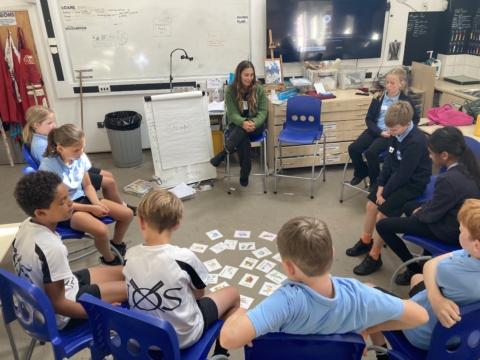
This fits RJ Working’s mission which is to invest Restorative Practice training in those young people least likely to have positive social-emotional coaching at home, while seeking to also ensure their education context – school or college – is universally equipped with the Restorative language and principles to support their leadership and teamwork. We know, from repeated experience, that the most effective route to maximising the benefits of the investment in individuals is to ensure a cultural shift in their context.
There is also a fit with the Fair Education Alliance national policy recommendations for 1)making schools part of connected communities,
2) joining up education, skills and employment, and 3) building a village around every child. Most excitingly, for us, Restorative Practice fits with the systems theory that underpins the Fair Education Alliance: it contributes to a ‘mental model’ (see page 15 of the 2026 Report Card).
To explain further, the narrative of the FEA is as follows…
Systems change asks: What factors keep inequity in place, and how can we shift them to create lasting change? We draw on the Water of Systems Change framework by FSG, which identifies six conditions that need to shift:
• Policies: National, regional and local government and institutional rules, regulations and priorities.
• Practices: Activities, procedures, guidelines or informal shared habits. For example, how schools support pupils or how services work with families.
• Resource Flows: How money, people and information are allocated, affecting who can access opportunities and support.
These first three conditions are structural, and often the focus of programmes or advocacy. But systems change also addresses deeper social and cultural conditions in the relational change layer:
• Relationships and Connections: The heart of the Fair Education Alliance – collaboration! Strong relationships enable solutions no single organisation could achieve alone.
• Power Dynamics: Systems change shifts power towards those most affected, ensuring decisions are shaped by young people, families and those with lived experience of barriers to education.
The final layer looks to achieve transformative change, shifting the underlying mindsets, values and assumptions that shape how systems operate and sustain inequality.
• Mental Models: The beliefs and narratives shaping how society understands inequity. For example, whether disadvantage is seen as an individual failing or a systemic issue.
For our alliance, systems change means working across all six conditions. This Report Card specifically focuses on the policy changes we believe will shift inequities.
The young RJ Working team believes that socio~emotional education, the 6 domains put forward by the Centre for Youth Impact, must be more widely understood as underpinning life chances alongside, and often a foundation for, educational attainment. As a new member, we intend to ask the Alliance to consider the denial of this part of education as a deep ‘mental model’. This would point to the need to shift the embedded assumption that cognitive learning is the only priority. It is evident from its three Policy priorities that the Alliance is already committed to socio~emotional priorities, though this is not explicitly stated. Exploring the value of Restorative Practice could help this mental model to open, become less static, more fluid, and this could help to amplify the significance of relational inclusion, pivotal for tackling inequalities.